

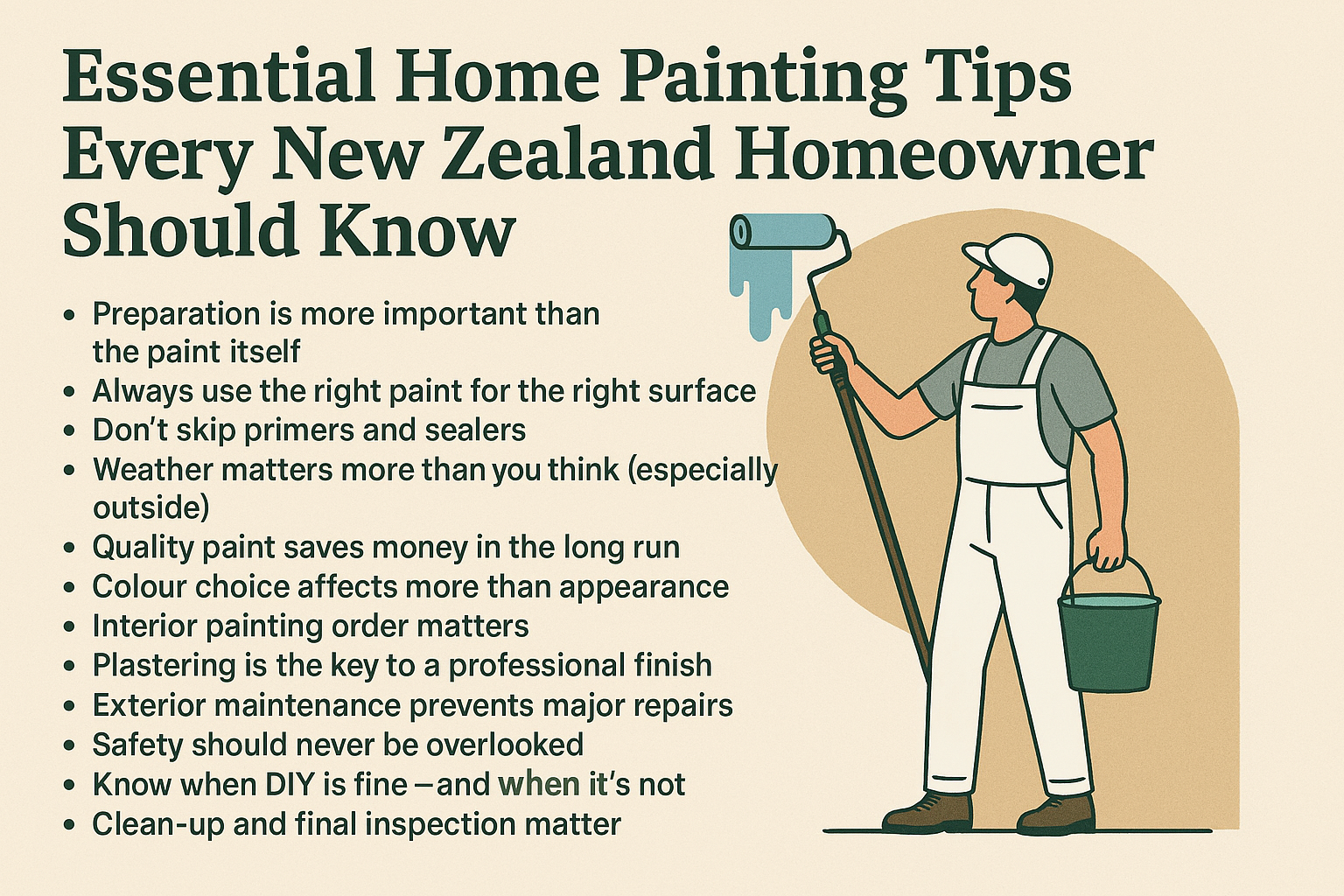
Painting your home is one of the most effective ways to protect your property, refresh your space, and maintain long‑term value. But a good paint job isn’t just about choosing a colour and rolling it on. Preparation, product choice, timing, and technique all play a huge role in how long the paint lasts and how good it looks.
At A Home Painting, we work on homes, renovations, and construction projects across New Zealand. Over time, we’ve seen what works, what fails, and what homeowners often overlook. This guide shares practical, professional painting tips to help you make better decisions—whether you’re planning a DIY job or hiring professionals.
1. Preparation Is More Important Than the Paint Itself
One of the biggest mistakes homeowners make is underestimating preparation. In reality, preparation can account for 50–70% of a quality paint job.
Before painting, surfaces should be:
- Clean and free of dust, grease, and mould
- Repaired (cracks, holes, dents filled and plastered)
- Sanded smooth
- Properly primed where required
Skipping these steps leads to peeling, uneven finishes, and paint failure much sooner than expected.
Tip: If the surface looks bad before painting, it will look worse after painting.
2. Always Use the Right Paint for the Right Surface
Not all paints are the same. Using the wrong type can cause peeling, fading, or moisture problems.
Common examples:
- Interior vs exterior paint: Exterior paint is designed to handle UV exposure and moisture. Interior paint is not.
- Bathrooms and kitchens: These areas need moisture‑resistant, washable paint.
- Timber, plaster, concrete, and metal: Each surface requires specific primers and paint systems.
Tip: Ask what the paint is designed for, not just what colour it is.
3. Don’t Skip Primers and Sealers
Primers and sealers are often seen as optional—but they are essential in many situations.
You should use a primer or sealer when:
- Painting new plaster or gib
- Painting over repairs or patched areas
- Changing from dark to light colours
- Painting bare timber or concrete
Primers help paint bond to the surface, improve coverage, and ensure an even finish.
Professional insight: Many “two‑coat” jobs fail because the first coat should have been a primer.
4. Weather Matters More Than You Think (Especially Outside)
Exterior painting is heavily affected by weather conditions.
Avoid painting when:
- It’s raining or likely to rain soon
- Humidity is very high
- Temperatures are too cold or too hot
- Surfaces are damp from dew or rain
Painting in poor conditions can trap moisture and cause blistering or peeling later.
NZ‑specific tip: Coastal and windy areas need extra care with drying times and paint selection.
5. Quality Paint Saves Money in the Long Run
Cheaper paint may look fine at first, but it often:
- Requires more coats
- Fades faster
- Chips or peels sooner
- Needs repainting earlier
High‑quality paint provides better coverage, durability, and colour retention.
Tip: Paying more for paint once is cheaper than repainting sooner.
6. Colour Choice Affects More Than Appearance
Colour influences how a space feels and functions.
Practical considerations:
- Light colours make rooms feel larger and brighter
- Dark colours highlight imperfections
- Neutral tones are easier to maintain and repaint
- Gloss levels affect durability and visibility of flaws
Flat or low‑sheen paints hide imperfections better, while higher gloss finishes are easier to clean but show surface defects.
Pro tip: Test colours on the wall and view them at different times of day.
7. Interior Painting Order Matters
If you’re painting multiple areas, order is important.
Best practice:
- Ceilings first
- Walls second
- Trim, doors, and frames last
This prevents drips and touch‑ups from ruining finished areas.
Tip: Use drop sheets and masking properly—clean lines make a huge difference.
8. Plastering Is the Key to a Professional Finish
Paint will not hide:
- Cracks
- Dents
- Uneven surfaces
- Poor patchwork
In fact, paint often makes these flaws more visible.
Proper plastering ensures:
- Smooth walls
- Even light reflection
- A clean, modern finish
Rule of thumb: If you can see it before painting, you’ll see it more after painting.
9. Exterior Maintenance Prevents Major Repairs
Exterior painting isn’t just about looks—it’s about protection.
Signs your exterior needs attention:
- Flaking or peeling paint
- Faded colour
- Cracks in timber or cladding
- Mould or algae growth
Regular repainting prevents moisture damage, timber rot, and costly structural repairs.
Tip: It’s cheaper to repaint early than to repair damaged cladding later.
10. Safety Should Never Be Overlooked
Painting can involve risks, especially on exteriors or construction sites.
Common hazards include:
- Working at heights
- Slippery surfaces
- Fumes from paints and solvents
Professional painters use proper safety equipment, scaffolding, and site procedures to reduce risk.
Important: Never attempt high or complex painting without the right equipment.
11. Know When DIY Is Fine – and When It’s Not
DIY painting can work well for:
- Small rooms
- Simple refreshes
- Low‑risk areas
However, professional painters are often better for:
- Full house repaints
- Exterior painting
- Plastering and repairs
- New builds or renovations
Mistakes in these areas can be costly and time‑consuming to fix.
Tip: Time, quality, and safety should all factor into your decision.
12. Clean‑Up and Final Inspection Matter
A quality paint job isn’t finished when the last coat dries.
Professionals always:
- Remove masking carefully
- Touch up imperfections
- Clean the work area
- Inspect the finish under proper lighting
This final step ensures a clean, polished result.